
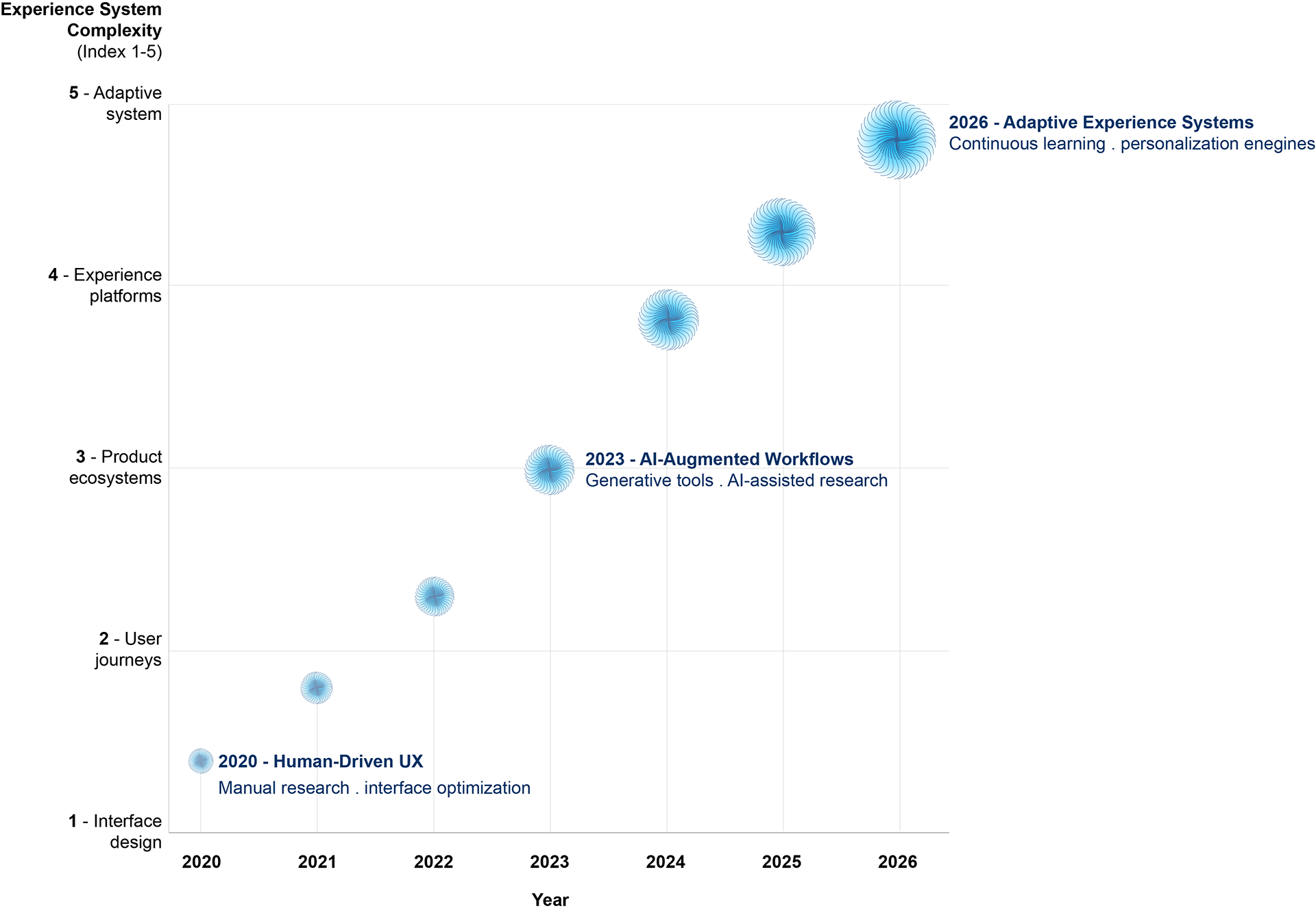
How we design information systems has changed a lot over time. We’ve moved from crafting one screen at a time to building adaptive, connected experiences that truly respond to what people need. I created this model to show what these changes look like in real life, drawing from what I’ve learned in both research and on the job.

INTERPRETATION
Today’s digital tools are always learning and connecting with other devices. Sometimes, they change how they work based on our actions, even when we don’t notice. That’s why design is not just about making systems flexible; it now needs to help people understand, trust, and use these tools with confidence. With this in mind, my goal is to design experiences that are intuitive, transparent about their inner workings, and empower people to make informed decisions as technology evolves.
KEY TRANSITIONS
