
What is Experience Architecture?
Experience Architecture is the practice of designing how entire systems function cohesively. It goes beyond focusing on individual screens or touchpoints, instead integrating journeys, platforms, content, measurement, and governance into a single, unified framework.
The goal is not just usability, but coherence—ensuring that user needs, business outcomes, and system behaviors are aligned and sustained throughout the entire experience.
As AI reshapes how decisions are made and experiences are delivered, trust becomes foundational. Experiences must be:
• reliable
• safe and secure
• transparent and explainable
• private and fair
These qualities cannot be added as afterthoughts—they must be embedded into the system from the start.
From Signals to Systems
Systems don’t interpret meaning; they simply respond to signals. If those signals are inconsistent, designing isolated touchpoints is insufficient.
To address this, a cohesive system is needed—one that connects human behavior, interpretation, and outcomes.
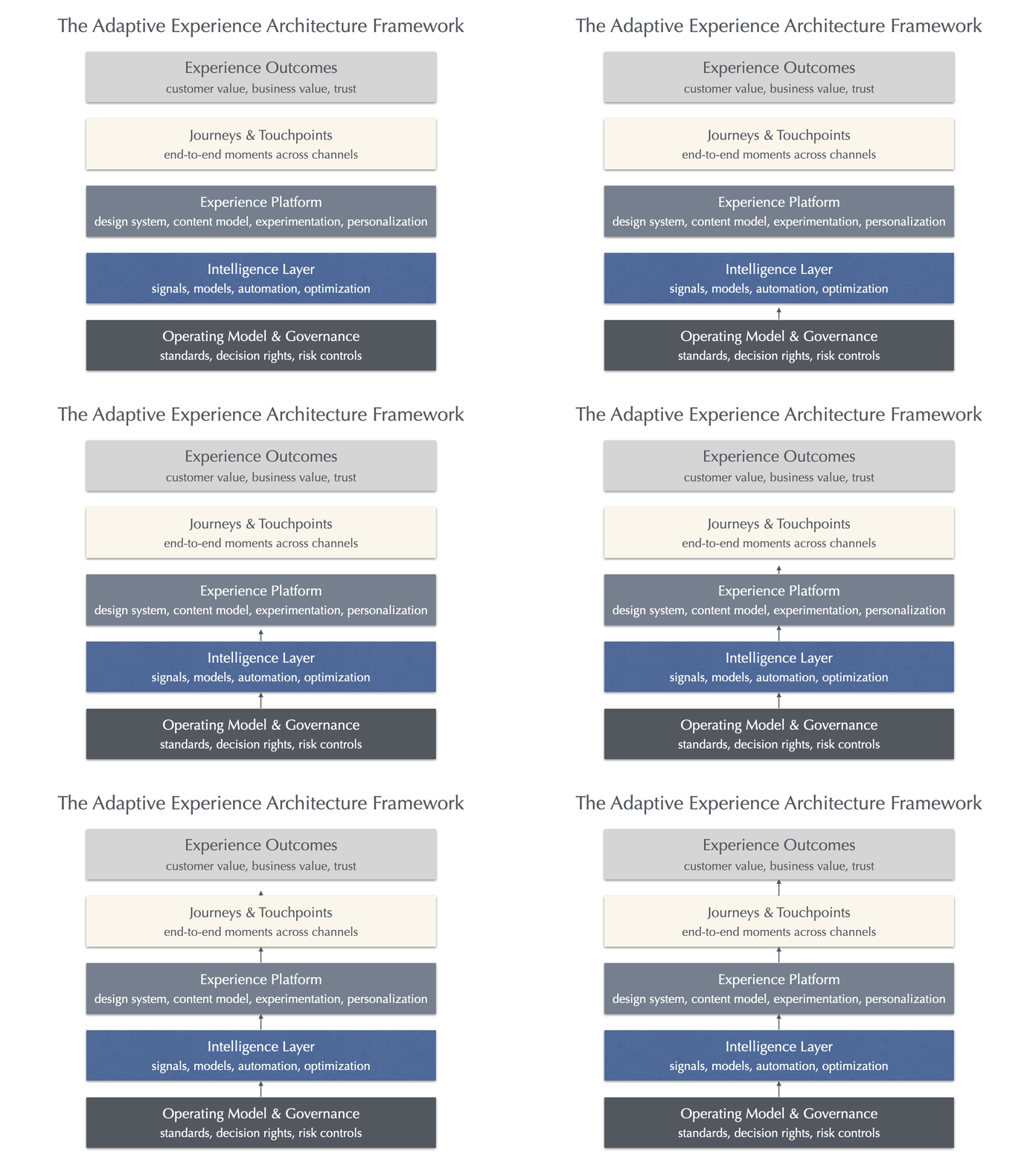
Why Does Experience Architecture Change in the AI Era?
AI doesn’t just scale systems—it fundamentally changes how they behave. When systems learn, adapt, and make decisions, risks extend beyond usability issues to include accuracy, bias, accountability, and unintended consequences.
This shift redefines the role of design leadership. It’s no longer about producing artifacts, but about designing systems that:
• align teams around shared outcomes
• incorporate continuous feedback and learning
• establish governance to manage risk and trust
Human-centered design still applies—but now it must operate at the system level. It’s no longer just about designing for users—it’s about designing how systems interpret, respond to, and learn from human behavior.
Signals Are Not What They Seem
As systems increasingly rely on signals to interpret human behavior, the gap between what is expressed and what is understood becomes critical. This disconnect is especially evident when we see how different signals can represent the same intent, leading to potential confusion.
Signal variability (example)
Input signals:
😂 💀 😭 🤣
Interpreted as:
"That's hilarious."
For instance, one meaning can be conveyed through many signals, highlighting both the flexibility and the ambiguity of human communication.
System response
User → 💀 → System → Outcome
Ultimately, systems respond to signals—not intent—which makes them vulnerable to misinterpretation when faced with inconsistent or ambiguous signals.
Key insight
When human signals are inconsistent, system outcomes become unpredictable.
How to apply this model?
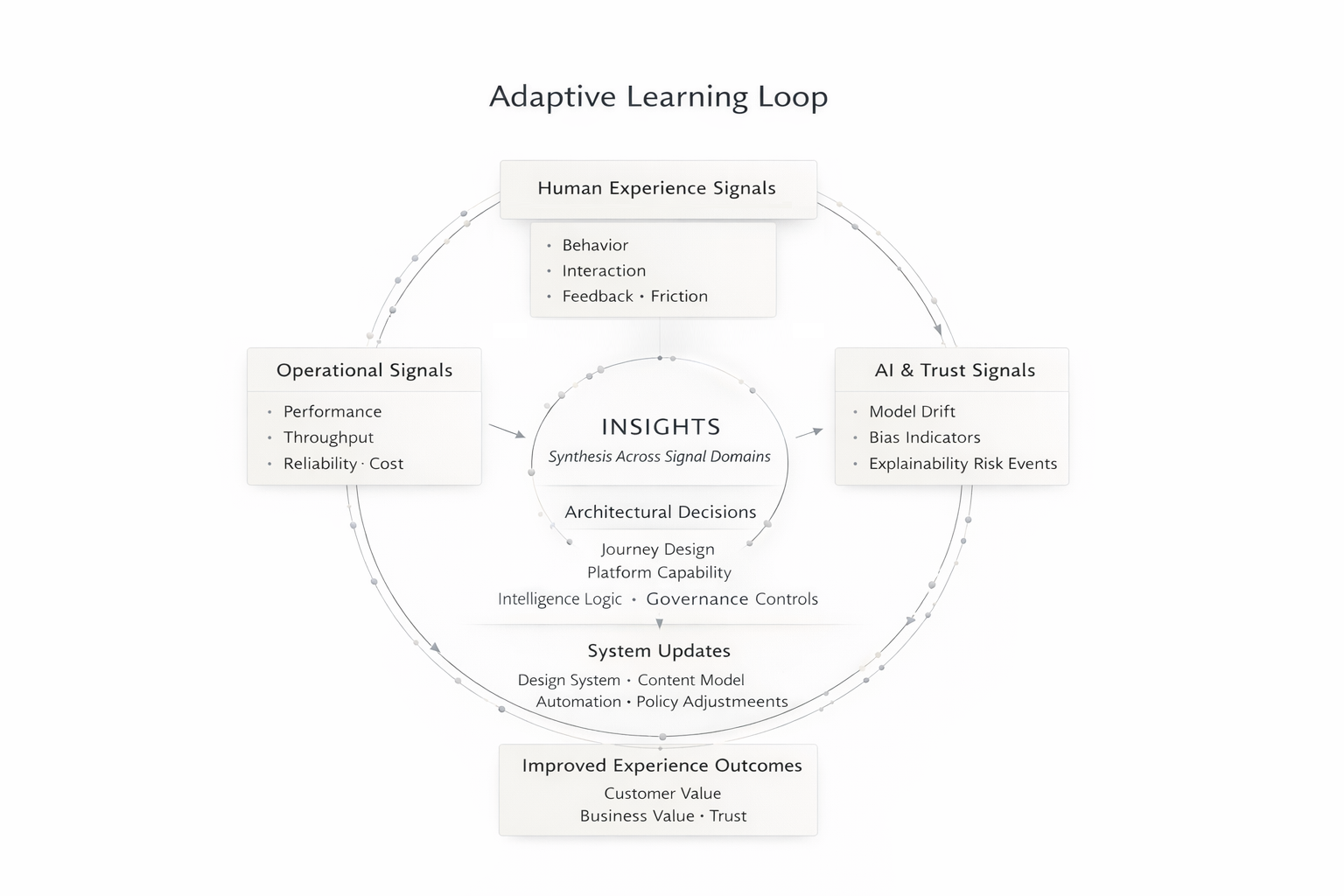
Deliverables include:
Core artifacts:
• Experience Architecture Stack (model)
• Learning Loop (operational feedback system)
• Metrics + trust checklist aligned to AI RMF characteristics
• Journey map template aligned to lifecycle + iteration
• Platform capability inventory (design system + content model)
How is success measured?
Experience metrics (HEART)
• Happiness
• Engagement
• Adoption
• Retention
• Task Success
Trust metrics (aligned to NIST AI RMF characteristics)
• Error rates
• Escalation and appeals
• Explanation usage
• Bias issue reports
• Privacy incidents
• Model drift indicators
Why does this matter?
This work reframes user experience (UX) as enterprise experience architecture—a holistic system that aligns outcomes, user journeys, platforms, data intelligence, and governance.
In AI-enabled organizations, the ability to design systems that both learn and remain trustworthy becomes a key strategic advantage.
References
Unicode Consortium. About Emoji.
National Center for Biotechnology Information. Emoji usage in digital communication (peer-reviewed research).